Showing posts with label America. Show all posts

Tuesday, 6 October 2020

Peg Monoplane (Boeing P.26) Complete

 What with the Christmas gift-making schedule my Funny Little Soldier production has slowed down markedly at the moment. But I'm still trying hard to slip a wee military model in between the other work!

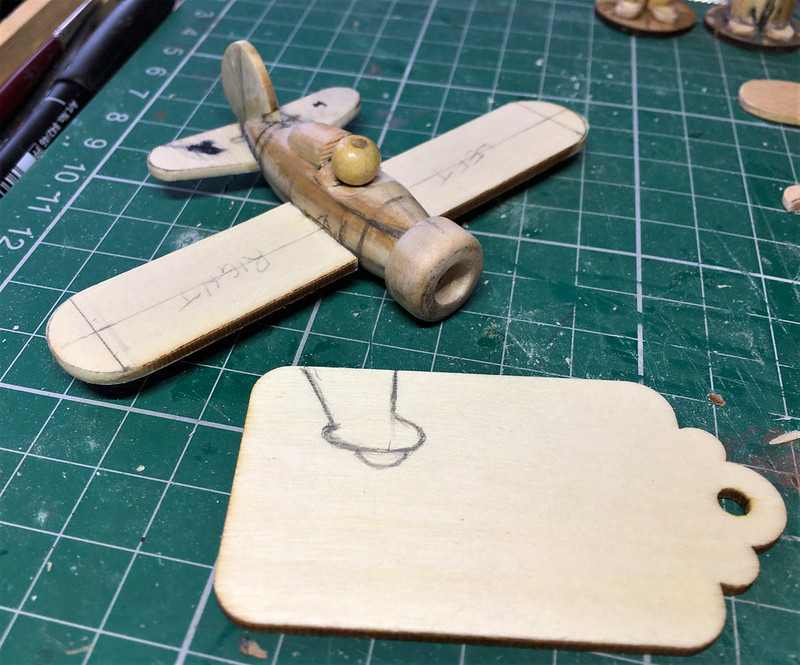
Today I completed my latest wooden peg aeroplane, my stylised take on the charming 1930s American Boeing P.26 pursuit aircraft...


The P.26 (or 'Peashooter' as it was nicknamed) was a little anachronistic even when it was first deployed by the US Army Air Corp, it's a bit shocking to think that just three years after the P.26 went into service the Germans had produced the Me109 and the British Hawker Hurricane was in the air!

Cute just couldn't cut it anymore!

I'd like to do some more 1930s monoplane fighters, maybe a Mitsubishi A5M or a Dewoitine D.500 or a PZL P.11?

Sunday, 20 September 2020

Peg Monoplane No. 1 Scheme & Decals

 My original idea for this little monoplane was for it to be the next addition to my Molatarian Air Force. It was going to have a purple and orange based colour scheme and emblems, BUT then...

As I mentioned in a previous post, this little aircraft's design is loosely based on the 1930's Boeing P. 26 pursuit fighter of the U.S. Army Air Force and - frankly - the historical schemes are so darn attractive that I found that I just could not persuade myself to do anything but one of these colourful designs. Here's an example...


Very pretty, and very typical of the era. So, you see, I couldn't resist having a crack at a real world scheme (maybe I can pretend it's on loan to the Molaterian Air Force). 😆

Well, the next thing was to transfer the scheme and it's lovely emblems onto the primed model ready to paint. I thought the easiest way to do this would be to trace the designs onto the plane using old fashioned carbon paper. But first I needed to create a suitably sized emblem template, this I did by drawing a copy using Affinity Designer (vector design software)...

The design drawn to the right size for the wings I convert it to a black outline and printed it out with guidelines to make sure I place it in the correct position on the model's wings...


I've never done a 'realistic' peg model aircraft before so I was a bit unsure how to go about doing all the detailed emblems and - indeed - how much to do (as this is a simplified model). So I decided to try a mix of masking and transferring the USAAF roundels and painting on the rest of the 'decals' straight on.

At the same time I painted on the two primary base colours of yellow and blue... (Can you tell that I'm making this up as I go along, as usual?)

Well, that's where I got to as I have so many projects on my workbench at the moment so I'm having to careful manage my time. The list of Christmas presents grows ever longer BUT I am making sure - for my own sanity - that I am doing some personal projects in between the 'jobs'! 😉

Indeed, I should have some good old toy soldiers to show you again very soon!

Monday, 14 September 2020

Peg Monoplane No. 1 - Props & Stuff

 Next up on the wee plane to-do list is the stand. I want my little peg planes to be displayed in the flight mode - for possible use in tabletop gaming - and so I am adding some transparent flight stand (by Dropzone Commander and available from WaylandGames.co.uk). This entails fitting a small socket component into the underside of the fuselage of my model...


I drilled an appropriately sized hole and then inserted the socket into it on top of a blob of Green Stuff putty. I chose Green Stuff as it is slightly flexible even when dry so will allow the socket to flex a bit when the end of the flight stand is inserted into it (it's quite a tight fit)...

Next I primed the plane ready for painting using my usual Grey acrylic spray primer. At this point I usually notice any problems with any joints I have made or if there are any major bumps or dents in the model as the flat grey paint tends to make these easier to spot. If there are any dinks (and there was a couple) I filled and sand them and reapply a bit of primer.

That done and dry it's time to think about the plane's 'engine' and propeller. I left these until this point as I won't be able to fit them - or, at least, it would be perhaps better to fit them - once all the rest of the model is painted.

Unlike previous peg planes I fancied having this prop spin freely so I had to put some thought into how I was going to make this work. I had to think back to when I used to make plastic Airfix aircraft and how they went about making a spinning prop unit, and then I devised cunning plan...

I assembled all the little components I thought I might need to make my prop and sketched out a rough shape on a lolly stick!

The next bit was slightly tricky as I wanted my model propeller to have that slight twist in it that they do in real life. So what I did was to drop my lolly stick into a cup of warm water and leaf it to soak for a while, then I removed it an *carefully* twisted it and held it in place for a while (wish I had some sort of desk clamp to help with this). After a while - and as the wood dried out - the stick retains the twist...

Job done! Though I'm sure I could have done this more easily and made a better job if I had rigged up a pair of clamps... Sitting watching TV for an hour holding the lolly stick in this position wasn't the most entertaining way to spend your evening! 😆

Anyway, once I had the shape I wanted it was just a case of cutting out the propeller...

I was quite pleased with the result. My only misgivings were - ironically - just how nice the wooden propeller looked!  I couldn't help but thinking how nice it would have looked if treated with just a simple coat of clear varnish, which would have really brought out the grain. Had my plane been a WW1 fighter this would have looked superb, but - a little sadly - my 1930's P.26 inspired monoplane has a silver painted prop. 😟

Anyhoo... Prop made, now to start putting together the bits that will make it free spinning once attached to the fuselage...

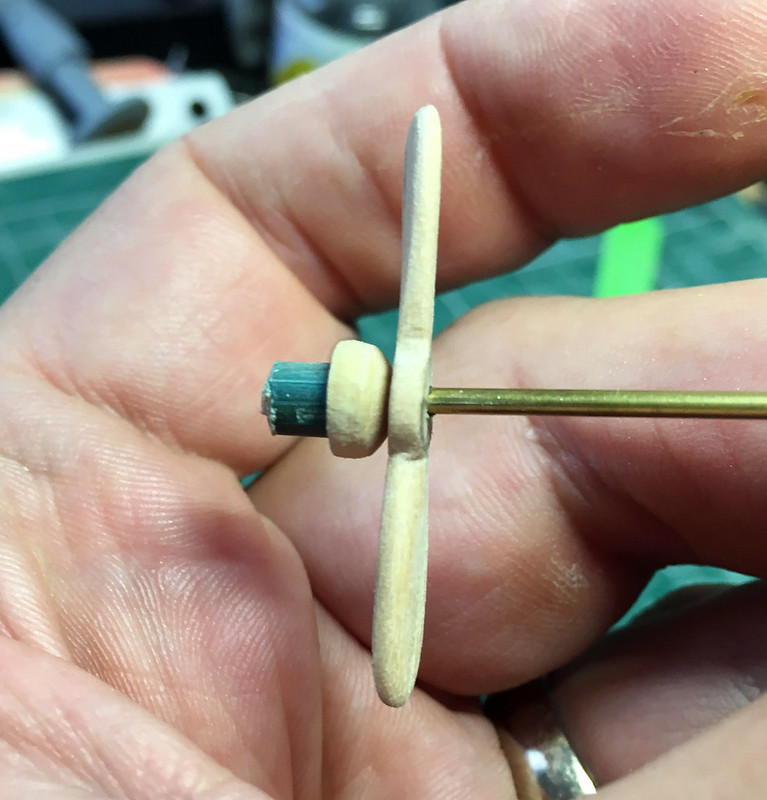
I decided to add a brass rod for a shaft as this would result in less friction and so would make free spinning much easier. The prop would be glued to the shaft and the faux engine piece would be glued to the inside of the engine cowel, in this way the shaft and propeller would spin freely around with the 'engine' holding the whole thing in place...

The shaft will be trimmed and a propeller spinner or cap glued in the end. However, all this will have to wait until the plane is painted, then we shall fit my contraption and see if it actually works. Fingers crossed, eh? 😉

Edit: Could't resist - had to test fit the prop (minus spinner) and I think it looks rather spiffing! 😆

Next: Choosing a paint scheme and painting the model.

Sunday, 6 September 2020

Peg Monoplane No. 1 - Progress Update

It's been a long week and a busy weekend, but I managed to reach my goal of getting the main construction of my monoplane done by Sunday evening (before I settle down to watch a movie)! 👍 

This project has been completely problem free - so far - and went together really quite quickly (for me). Obviously the model is a simplified - almost cartoonish - take on the aircraft which inspired the design (the Boeing P. 26), but even so I am quite pleased with the progress... Particularly because I have so many projects on the workbench at the moment.

I really like making my self-imposed 'Sunday night deadline' as it give me a real sense of achievement and I feel like I have actually done something before I return to work on Monday morning.


There's not much I can tell you about the construction really as the accompanying photos say it all, I think. However, I should point out that I have not made the engine and propeller part of the model yet as I want to install this after I have painted the rest of the aircraft. [I'm working out how to make the prop free spinning.]

Well, that's another weekend gone. I am starting to think seriously - though - about my peg model hobby and how it's kinda starting to take over everything. I've almost totally ceased a couple of my other hobbies and their associated blogs and I am aware that peg model making has hijacked this blog as well.

I have NOT lost interest in Molatero and the idea of creating a Funny Little Wars army, but at the same time the making of funny little peg soldiers seems to fit into this blog quite nicely. Though, I may stray slightly off-topic on occasion with my tenuously related non-military peg project - such as my Lovecraftian Horror based figures and Pop Culture characters. O hope you - my audience - will forgive their trespass! 😁

Tuesday, 1 September 2020

New Project - Peg Monoplane No. 1

 So much going on at the moment and it seems I am a bit of a victim of my own success! Yes, the requests for peg figure commissions have begun. In truth, I have already had a few enquiries about purchasing custom peg  models but so far I have kinda ignored the thought of this becoming a cottage sideline... The thought of a relaxing hobby becoming a business has not really appealed to me.

Anyway, that's my problem to figure out. In the meantime, I'm starting a new little plane model - as if I didn't have enough going on! 😉

It'll be in the style of my previous little cartoon style bi-plane fighter - my 'Purple Baron'...


But this time I fancy trying out a different period. I have a particular liking for the aeronautic history of the early 1930s as it was a very exciting time, foreshadowing - as it did - the next World War with the Great Powers trying out their latest technological advances. Yet, at the same time, it was still a time of the romance of air travel and adventure!

In 1930 the bi-plane fighter was still queen of the sky and monoplane warplanes were still something of a novelty. Designs were quaintly crude and still included features that were soon to become obsolete - like open cockpits and fixed landing gear - but which lent these war-birds a certain cuteness. 😃

For my first attempt at a peg monoplane I decided to use a particularly endearing American design as a template for my little model...

The Boeing P-26 "Peashooter" was the first American all-metal
production fighter aircraft and the first pursuit monoplane to enter
squadron service with the United States Army Air Corps. [Wikipedia

Making a Peg Plane...

Calling this a 'peg plane' is a little bit of a fib as I am starting the main bit of construction - the fuselage - will be done using a length of dowel rather than one of my usual beech dolly pegs. This is due to my decision to try out dowel as an economic alternative to pegs as dowel also offers the posibility of less waste cut-offs.

I begin by roughly sketching out the basic shape of the body of my plane on a section of dowel...


This is then roughly shaped using my rotary sanding machine, thinning the tube down to a point to create the tail of the plane. The length of the fuselage will be about 60mm, the effect being to shorten the overall size by squeezing it into a cartoon version of the real aircraft's dimensions (I believe the Japanese call this caricaturization of vehicles 'chibi' which is Japanese slang for 'something short).


Once I have the underlying shape I want it's time to work on some of the detail, like carving out the cockpit and adding the elongated flared headrest and the engine cowel...


With these rough shapes added they can then be smoothed down into their final shapes, blending them into - hopefully - a seamless and aerodynamic appearance. Additionally, I created a little pilot - or at least his head - using a small wooden bead, which I pinned in place...


It's starting to look like the P.26 now! The next job will be to work on the wings, but I'll leave it here for now and get on with some of my other 'production line'! 😂

Tuesday, 30 June 2020

The Good, The Bad & The Ugly

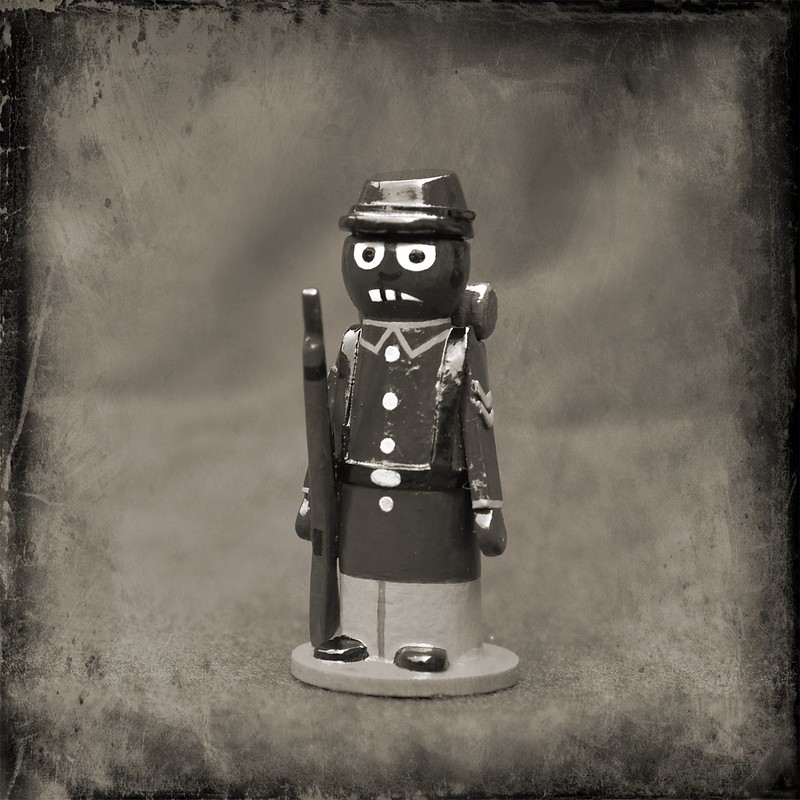
Sometimes creative projects don't turn out how you imagined they would and sometimes a project becomes somewhat unstoppable even though you ca see it's going wrong...So you just have to finish it and learn from the experience.

This was the story of my latest peg soldier...


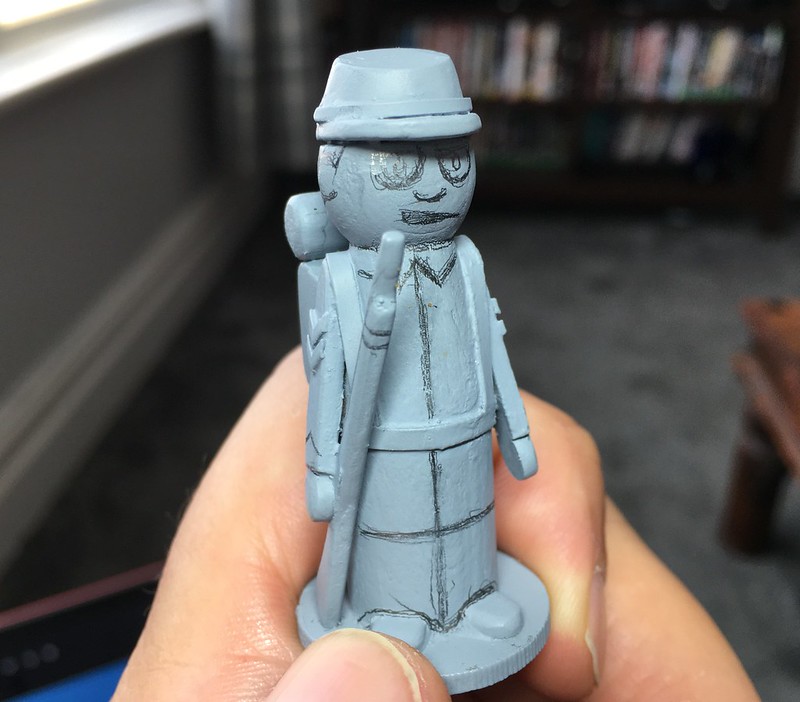
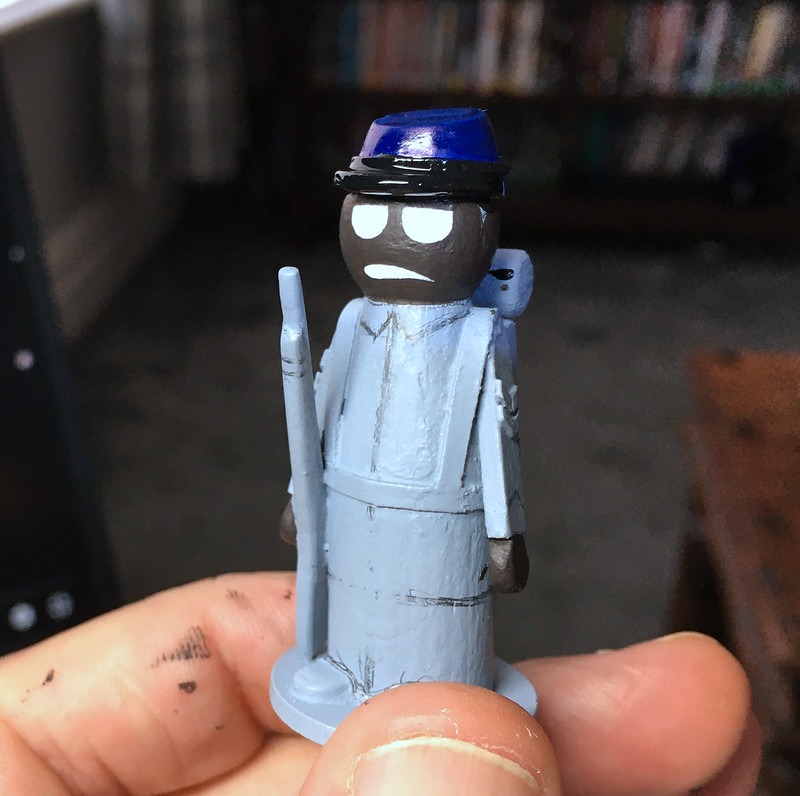
What I was trying to do was try out a few different ways of making a peg soldier - I tried out a new way of adding the figures arms and it's feet and it's equipment. The choice of uniform for this figure was completely incidental but I happen to love the 1989 movie 'Glory', with Matthew Broderick, Denzel Washington, Morgan Freeman, et al.


Set during the American Civil War, it's a story about the 54th Massachusetts Infantry Regiment, one of the first all-black regiments in the Union Army. It made a great impression me, not least because of some superb acting , which in turn made me into a big fan of Denzel Washington!

So, I wanted to honour the 54th by painting my peg figure in the uniform of the regiment...And that's when things started to go a bit pear shaped...


I did things pretty much the way I've done most of my peg soldiers so far, a caricature figure in the style of a children's toy soldier. Everything came together quite easily until I started painting the face. It followed the same pattern as I had done numerous times before, all except that - for the first time - I was painting an African-American face.


As the face started to take shape I began to feel a little uneasy, but as I inherently lack self-confidence about my work I put it down to creative nerves, so I continued on hoping to simply work through my 'normal' jitters...


So often in my creative experience I have never been quite sure about whether a project is 'working out' right up until I put the last stroke of the pencil, piece of sculpture or lick of paint to the work. This is how it was with this little soldier, I wasn't absolutely sure about what was wrong with it until I finished it...


You would think that in the current climate of BLACK LIVES MATTER that I would have been a tad more sensitive to the inappropriate use of racial stereotypes. I'm afraid, despite the fact that my figure was simply following the format established by my previous peg soldiers and their 'cartoon' features applying a 'black face' to my model made a strikingly insensitive and historically derogatory look.

That's the UGLY truth... Lesson learned.

So, that out the way, what was the GOOD and the BAD of this model?
Moving back to the technical aspect of the model there are a few other things that I'm still not happy with. Still concerning the facial features - but from a different perspective - I am finding that the painted on nose in't working for me, particularly when looked at in profile.

Additionally, I'm starting to question whether the simplified 'legs' - or lack of them - is the way to go. A simple painted line to indicate the separation of the legs is perhaps a little too simple...Maybe?

I'll try some alternative solutions for these BAD (?) aspects to my models...

Moving on to the positive, the GOOD bits of this iteration of my peg soldiers must be the new way I am doing the arms and the new simplified feet. I know this all seems trivial but I'm trying to improve my peg models to the point they are easier to put together than my earliest versions and yet still remain - substantially - as attractive.

...And so, on to my next experiment!

Saturday, 27 June 2020

Peg Figure Experiment - Part 4

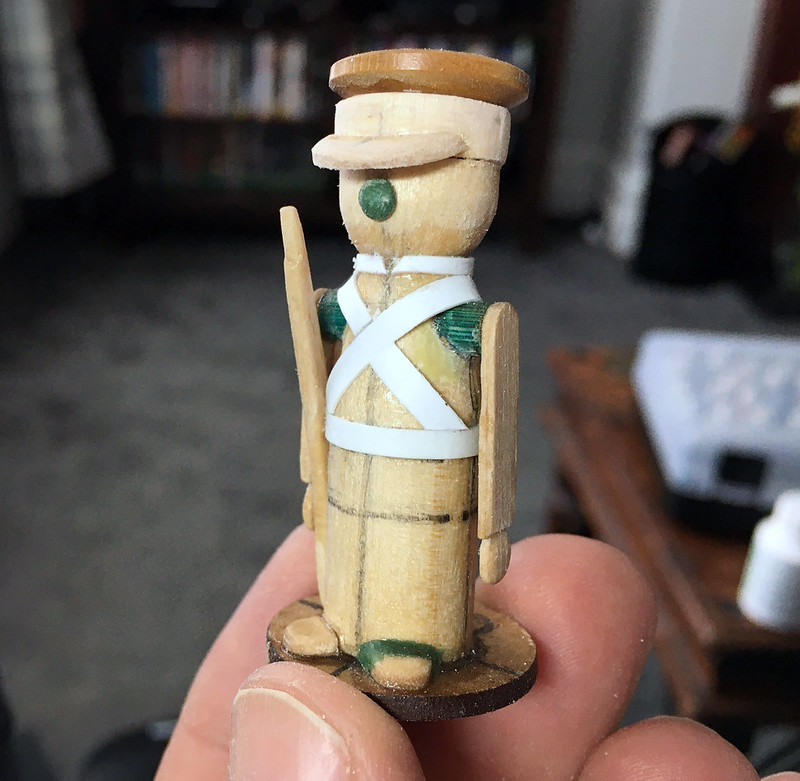
Moving on with my peg soldier experiments, Figure 1 (ACW Union soldier) is progressing well and I should have a reveal of it up in the next few days - while Figure 2 is definitely starting to take shape.

Before I show you how Fig. 2 is looking I suppose I better introduce you to a bit of reference material that I collected for these experiments...


I've been 'reading' (listening to) Douglas C. McChristian's audiobook 'Regular Army O!: Soldiering on the Western Frontier, 1865 - 1891', an wonderfully evocative insight into the Western period US Army. This got me interested in the evolution of the US soldier and so I decided that when I am making peg prototypes I would take the opportunity to produce some of the uniforms showing the American soldier throughout history. And so...


This is my take on an American infantryman from the Mexican War (1846-48). It's an interesting uniform that I *think* I vaguely remember from the movie 'The Alamo' (possibly)? This was an exceedingly engaging period as - along with the 1812 War - it gives you a bit of an insight as to how the American Army was comparable to European ones during the Napoleonic influenced period of military history.

U.S. Army full dress and campaign uniforms, 1835-1851.
Anyway, nearly finished the construction, just some equipment to attach and then it's ready for priming and painting.

Thursday, 21 June 2018

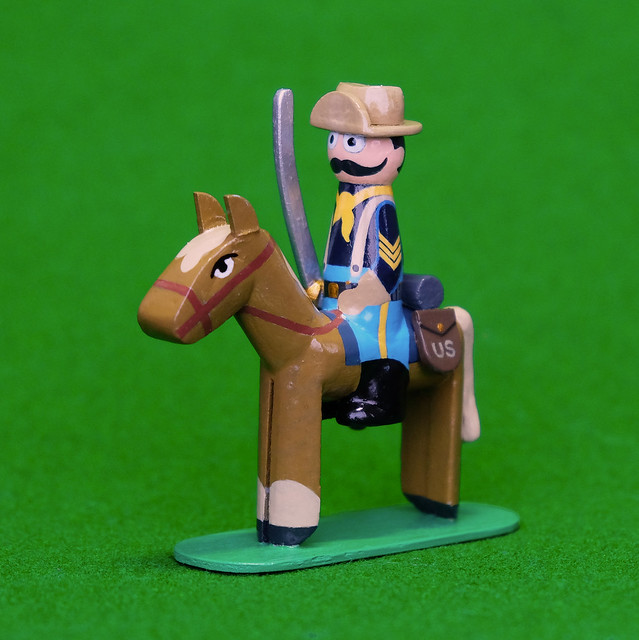
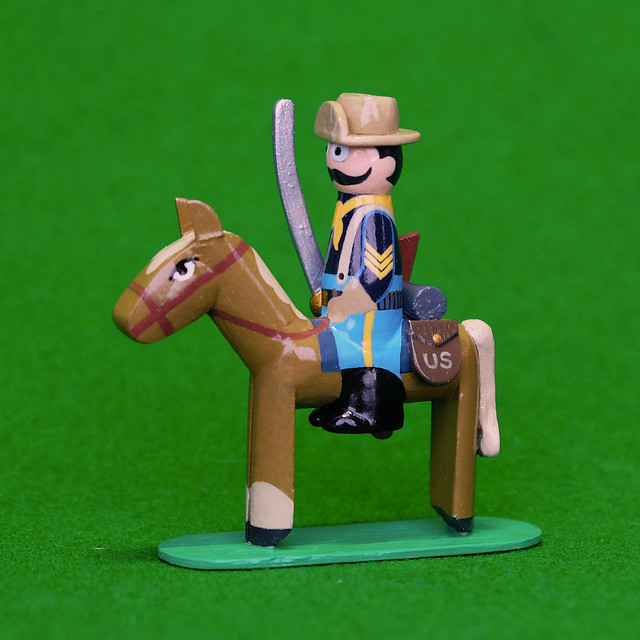
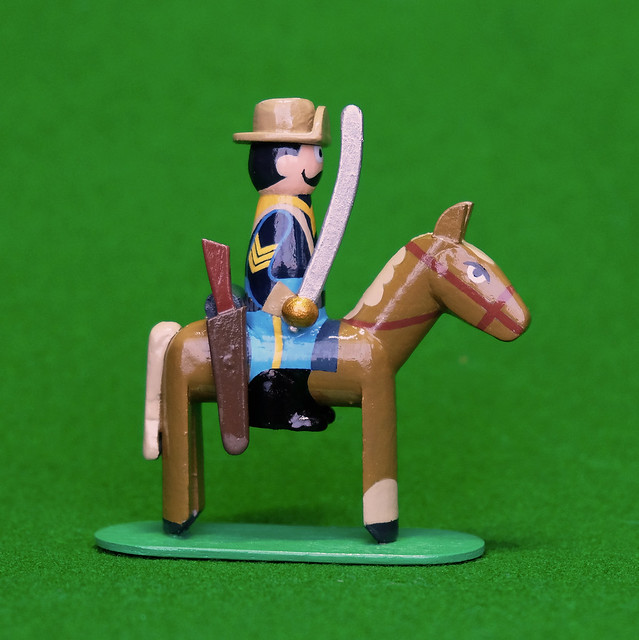
He Wore a Yellow Ribbon.

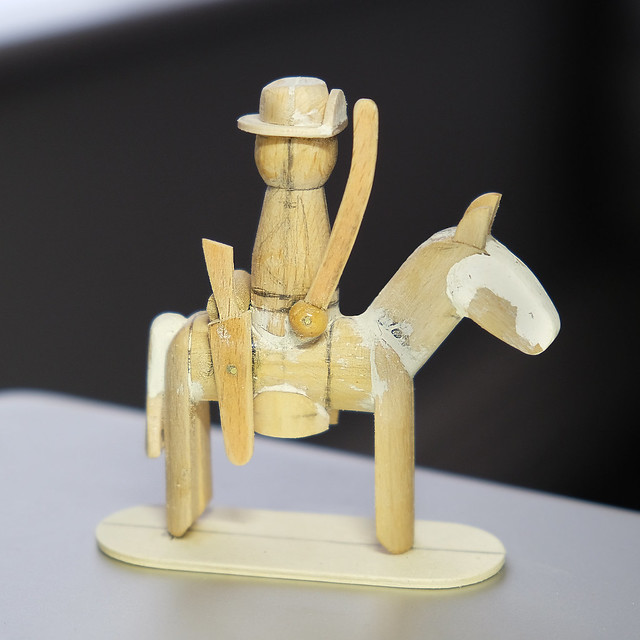
I couldn't resist doing this model...Absolutely, nothing to do with anything, except a bit of nostalgia about Tempo plastic soldiers (if you remember them)!

As inspiration, I guess I have fond memories of that old 1947 John Wayne movie 'She Wore a Yellow Ribbon'. But, I also recently bought a copy of G.I.'s 'Sound the Charge: The U.S. Cavalry in the American West, 1866-1916'.


I'm a bit happier with the way I did the rider's legs with this model, but there's still room for improvement (as usual).

Enjoy!

Friday, 1 June 2018

Peg US Cavalry, For Fun

Having worked out the technicalities of putting together a peg horse and rider, it's time to do a painting test. And, as this is just an experiment I thought it would be fun to chose a subject for my painting that's a little different from my usual theme of 19th century European soldiers...


As a kid, I was brought up on Saturday morning picture show re-runs of old Westerns and for young boy at that time the highlight of any 'B' movie Western was when the US Cavalry charged in to the rescue! :)

This coincided with my getting into plastic toy soldiers and a particular favourite of mine was Tempo's strangely creepy US Cavalry. So, as a bit of nostalgia I have had a go at recreating a soldier from the old Wild West...


In practical terms, this model should help me check whether my plan for painting in the rider's legs will work. Fingers  crossed!

Sunday, 11 October 2015

IMEX 1/32 Confederate Complete Casson Set review.


As I am interested in my Molaterian field artillery at the moment I thought I should investigate how my field guns might be drawn and what limber they might use. So, I had a look around at what plastic horse artillery caisson or limbers sets there were in 1/32...The short answer is not that many.

What is a 'casson' (or caisson)?
'A caisson is a two-wheeled cart designed to carry artillery ammunition. Caissons are used to bear the casket of the deceased in some state and military funerals in certain Western cultures, including the United States and United Kingdom.' Source: Wikipeadia
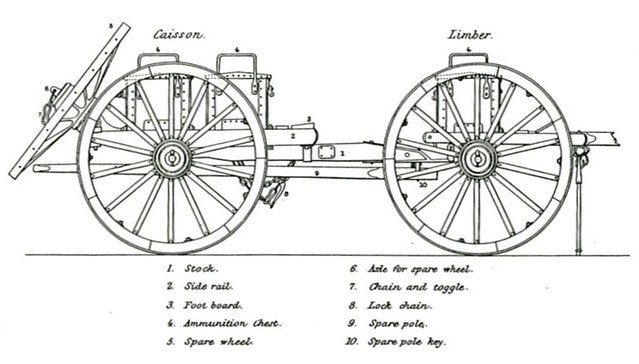
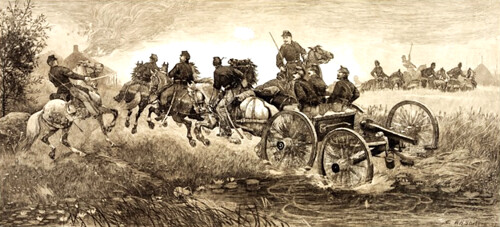
Diagram of a Caisson (left) and Limber (right) combination. IMEX technically
supply you with a limber, yet they call their set a 'casson' set. To a degree the
two words can be interchangeable, but were you to be pedantic a caisson is a
larger 'cart' which provides extra ammunition and other spare parts.

While limbers and caissons are two different things, they are often confused. But, generally, the limber is a wheeled support for the 'tail' of a field gun, while a caisson is a wheeled ammunition carrier. The confusion derives from the fact that a caisson can also act as a limber. [Note that IMEX calls it's ACW horse artillery set a 'casson' set. I presume this is due to an American interpretation of the spelling.]
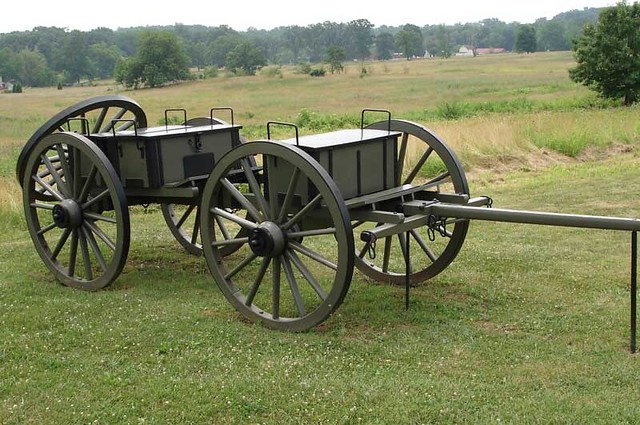
Limber (right) and Caisson. Source: Wikipedia

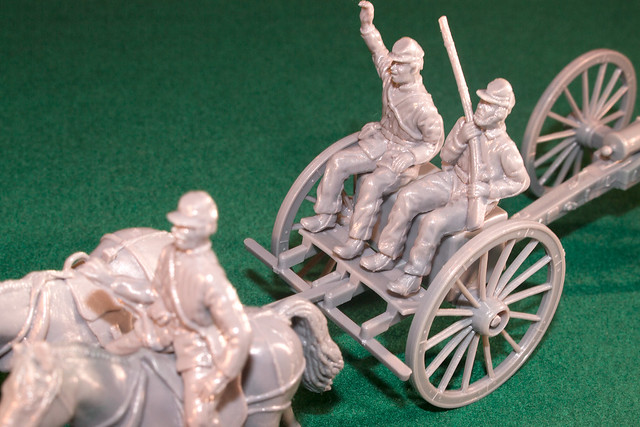
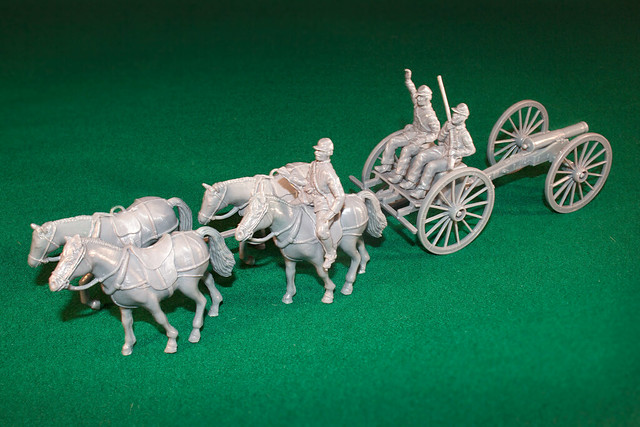
Anyhoo...Rather annoyingly, the only 1/32 horse drawn gun set I could find was made by IMEX - an American Civil War horse artillery set. I say annoyingly because - here in the UK - it is rather expensive at £20. Though, to be fair, it is rather a large set which includes horses, caisson, cannon and 18 figures.

As I was unable to find any review of this set, or indeed any photo reference of the contents of the box I bit the bullet, bought it and so I thought I'd produce a review of my own...

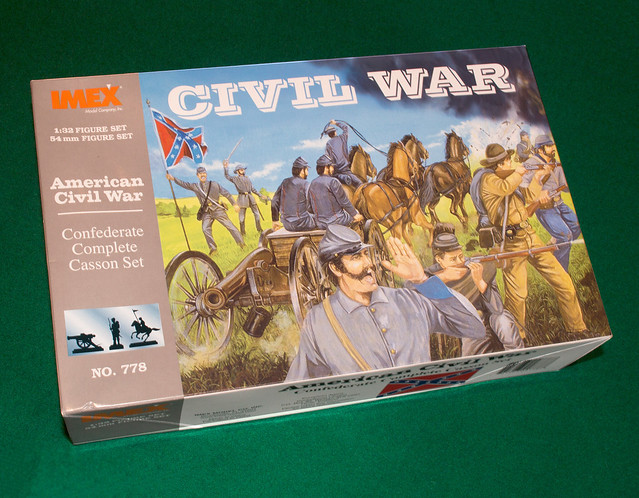
The IMEX American Civil War Confederate Complete Casson Set
The first thing you notice with the IMAX 'casson' set is the size of the box (xxx x xxx) - it's a big set!


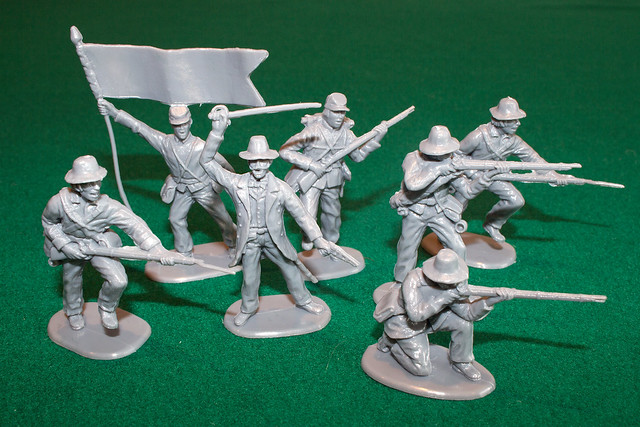
There is a lot in the big box, with  no less than 18 confederate soldiers, 4 horses plus cannon and limber (sorry, 'caisseon'). Eighteen soldiers seems a lot for a single field gun crew, and it is - x of these figures are Confederate infantry armed with Springfield/Enfield rifle-muskets and their officer.
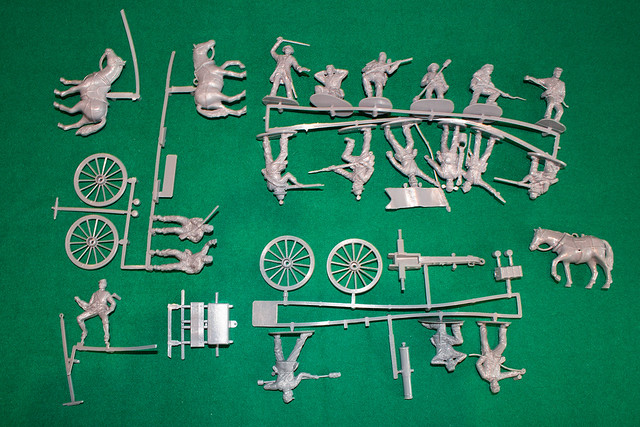
One of the horses went AWOL here...But I found it later!

The components of this set are plastic, but it is a slightly harder plastic than one normally find with plastic toy soldiers (but not plastic kit hard). This is quite nice with regards to the crispness and rigidity of the soldiers' rifles, a component that so often suffers from bending because of the soft plastics normally used.

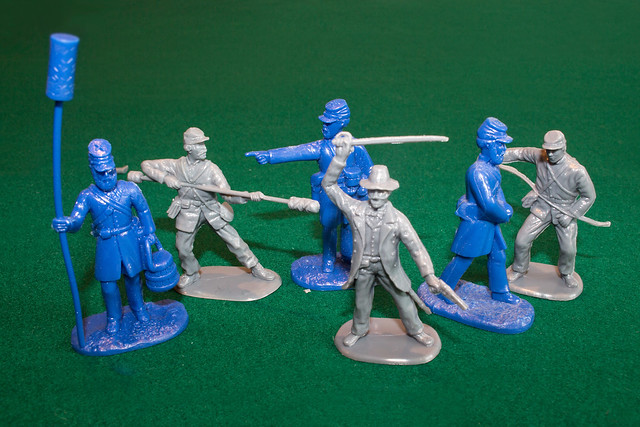
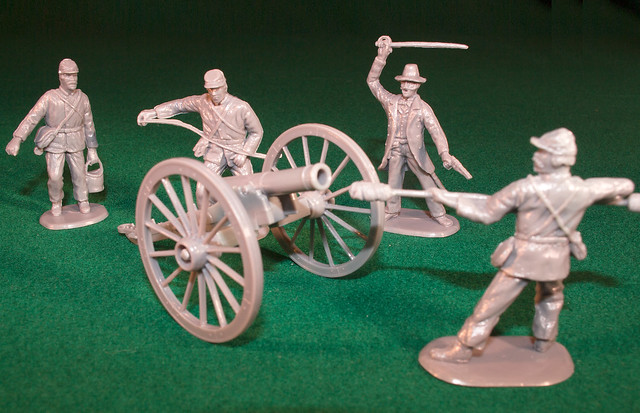
Scale-wise the IMEX figures are close to those of - for example - Armies in Plastic, though maybe a little shorter and skinnier. Here's some comparison shots, Armies in Plastic Union artillerymen in blue IMEX Confederates in grey...
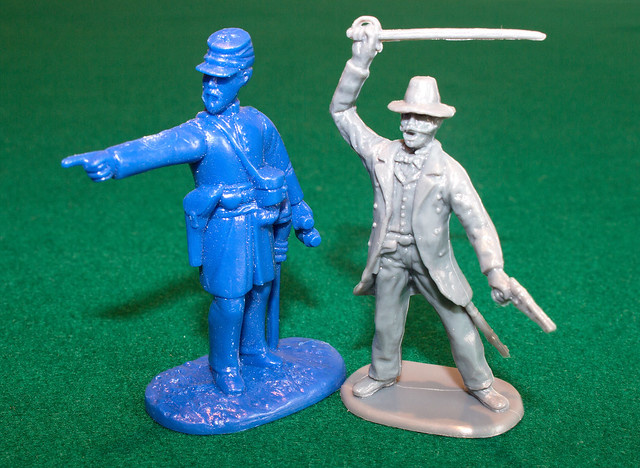
I suppose there isn't that much in it, depends how picky you are! The IMEX chaps
have a little more character to them I think though, in their looks and poses.

Additionally, as you can see from my photos, the sculpting of the figures is a little more detailed or should I say 'gritty' that those of AiP's. By 'gritty' I mean the actual texture of the sculpting, which isn't as smooth as an AiP sculpt. It's a little more 'realistic' in it's attempt to recreate the folds in clothing, whereas AiP are definitely in the toy soldier camp as far as how they portray their subjects (they include less detail and material textures are simplified).

My first impression was that the IMEX Confederates were a little 'raggedy'. But, historically, I guess this was probably fair comment and this is further emphasised by the ad-hoc nature of the 'Rebs' uniforms (indeed the box art illustrates the inclusion of civilian garb as part of the Confederate dress).

The IMEX gun team figures (probably enough for two guns really).
The Confederate infantry platoon that accompanies the IMEX set.

So these aren't parade ground - beginning of the war - Confederates. But I am sure ACW enthusiats will put me right on this matter!

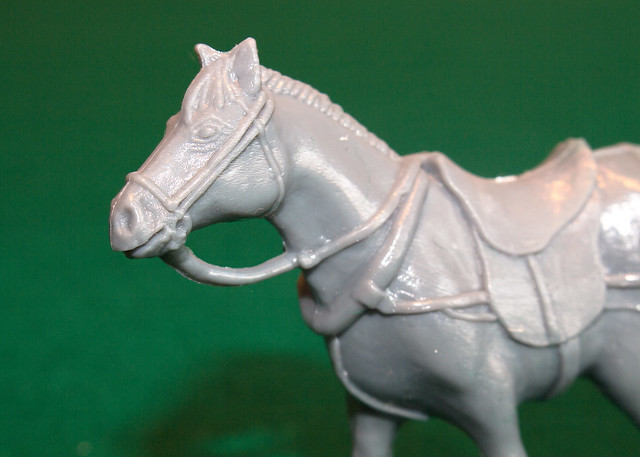
The horses are a little disappointing. They are rather 'chubby' beasts and there is something a little comical about the expressions on their faces!
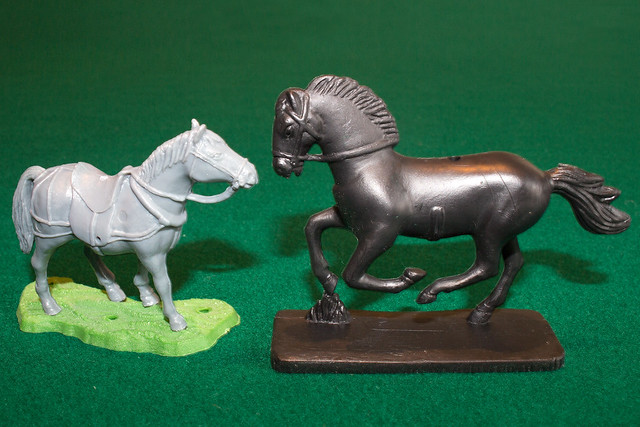
Left: IMEX horse. Right: Armies in Plastic cavalry horse. The stand under the
IMEX horse is from another set, it's just there to equal out the height.
Is he laughing at me?
Scale wise the IMEX horse do look a little squat. As endearing these little fellas are they don't really say horse artillery to me - I imagined something a little bigger, leaner and muscular. The IMEX horses seem to say 'trust me with your 11 year old daughter on her point-to-point'!

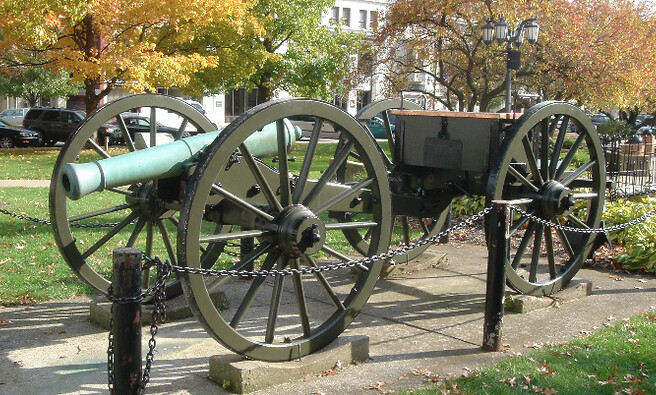
The cannon is a nice piece, it's a light gun and I'd even go as far as to guess it's one of the early bronze 1841 Confederate 6 Pounders. This places it as an early ACW piece of field equipment, as by mid-war the 12 Pounder was more prevalent I believe. But I'm no expert, I'm just going by comparing the model to images on the Internet...

Model 1841 6-pounder attached to its limber. Source: Steencannons.com

So overall you do get value for money (if you compare the IMEX set's price to box sets made by AiP or Italeri), principally because of the addition of all the extra infantry.

Were I pernickety (and I am) I would be concerned how these figures fit in with my other plastic soldiers. If you have gone down the IMEX route for all of your ACW plastic soldiers then fine, but looking at the IMEX figures next to the AiP ones I'd have to hope that once I'd painted them in a similar style that the variations in scale and sculpting style might no be so noticeable (we shall see when I paint a test figure).


Obviously, one must remember that these toy soldiers - when 'played with' as part of a war game - will be seen from tabletop or even floor distance and so any variations in scale might not be noticeable at all.

In the end though, as this is the only relatively cheap source of a 1/32 plastic full horse artillery team available in the UK you may find yourself with Hobson's Choice.


(I note, with some envy, that our American cousins have access to a wider variety of choice. For example, Classic Toy Soldiers USA make a nice ACW limber in 54mm for just $1.95! And if you want something a little special then Marx make a wonderful Commemorative Reissue of their classic Confederate Limber Play Set which comes with both a limber and a caisson for $22.95!)

--------------------

The IMEX set in the context of my FLW hobby
Having talked about the IMEX set generally I'd just like to add a brief note about the set in context of Funny Little Wars and also from the point of view of my possible use of the set.

Obviously the relevancy of this set is limited as this sort of cannon is more suitable to the mid rather than late 19th century (which is the period which interests me the most). That said there were - historically - situations where this sort of smoothbore cannon was still in use quite late, particularly in colonial campaigns and in the hands of 'native' armies and armies which were less 'modernised' than their European counterparts.

As I mentioned, I really wanted the horse team and limber components of this set for my late 19th century artillery team - particularly for an AiP Krupp 75mm gun project I have in mind - so the 6 Pounder is probably going to the spares box.

As to the figures, the artillery team will convert nicely for the role of Molatarian gunners (and auxiliary troops) but I have a cunning plan in mind for the rest of the Confederate infantry. I would really like to make a regiment of Molatero civilian irregulars, a militia unit in non-military Victorian clothing (would love to convert a few figures into full evening dress, top hats and all)!