Showing posts with label reference. Show all posts

Saturday, 3 October 2015

Library additions for October 2015

Aside from the collecting and painting of figures my FLW hobby has lured me into becoming something of a (very) amateur historian of all things 19th and very early 20th century. I've collected a small library of books which cover military campaigns from the Franco-Prussian war (1870) to the Balkan Wars of 1912, mostly reference works about uniforms of the period.

This months additions to my library are rather niche and interesting - I think - and add to the range of scenarios that the FLW player can field.

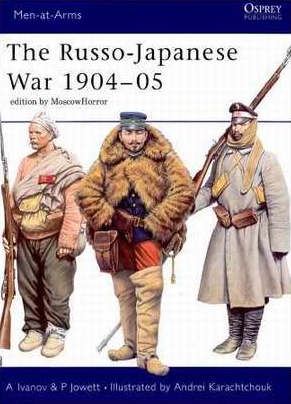
Osprey's The Russo-Japanese War 1904–05
This is rather topical for me as part of last months pay day treat was my purchase of some Japanese
soldiers by The Virtual Armchair General, so it's interesting to read about a campaign in which these soldiers could be used (from a war gaming point of view). That's not to say I intend to expand my collection of TVAG figures or to war game with them, it's just interesting to have some historical context for the TVAG Japanese.

Additionally, I found it very intriguing to read about a war which is not so well know - at least here in the West. The Russo-Japanese War of 1904 is consigned to the bottom draw of Edwardian era campaigns mainly because it's 'not European' (as we have this tendency to get a little confused about whether Russia is European or not). Furthermore, we tend to be a bit snooty about the idea that a non-European nation - like Japan - could be modern enough (in the context of the 1900s) to merit the same attention as a European or American army of the same period...

Well, as it turned out this was exactly the same sort of misconception that the Russians appeared to be under and boy did they pay the price for their ignorance of the real facts!

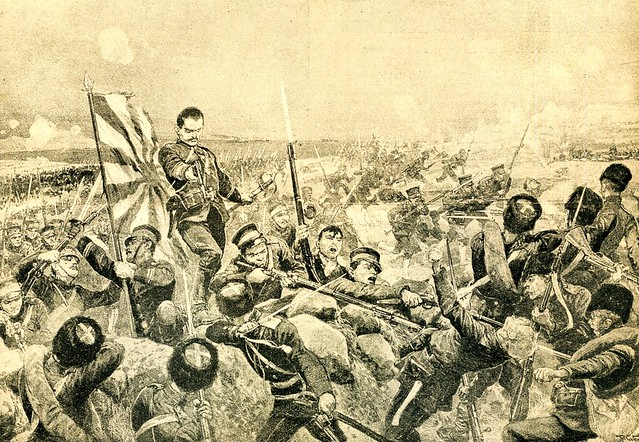
Japanese assault on the entrenched Russian forces, 1904. Source: Wikipedia
Wikipedia entry (should you wish more information): Russo-Japanese War
In actuality, as some of us might be aware - as is related in the excellent movie 'The Last Samurai' - the Japanese enthusiastically embraced Western style modernisation in the mid-19th century and by the 1900s had a very modern and technically sophisticated military. Not only were the Japanese as technically up-to-date as European armies but they showed themselves to be extremely adept in all the latest military theory and strategy as well...Hence Russia's hugely humiliating and unexpected defeat.

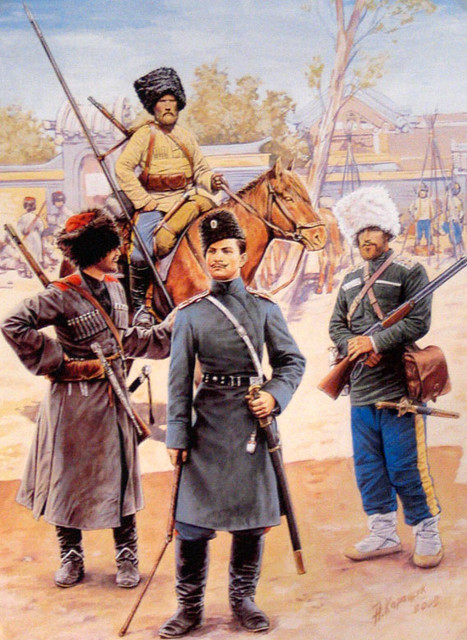
Left: Plate from Osprey's book. As much as my emphasis has been on the Japanese involvement the book has some wonderful illustrations of Russian forces. What FLW general wouldn't want a squadron of these Cossacks? Source: Osprey

The Osprey book has - as usual - some wonderful colour plates of the uniforms in use by either belligerent during the war. And it's interesting to note that the Japanese of this time went through the same transition in uniform styles that their European counterparts did just prior to The Great War - from brightly coloured 19th century styled garb to the more subdued 'earthy' 20th century attire.

From an FLW point of view this book would make an ideal companion to AiP's Japanese and Russian plastic soldiers.

MEN-AT-ARMS 414
Author: Alexei Ivanov, Philip Jowett
Illustrator: Andrei Karachtchouk
Short code: MAA 414
Publication Date: 25 Jul 2004
Number of Pages: 48

Link to the book at Osprey's web site: The Russo-Japanese War 1904–05

A World Aflame - Interwar Wargame Rules 1918-39
My second Osprey book this month isn't about uniforms nor, indeed, strictly speaking the classic FLW period. Rather 'A World AFlame' deals with war gaming the inter-war period of 1919 to 1939.

While not strictly a war gamer - let's just call me 'war game curious' - I do find the notion of playing out some of the inter-war scenarios fascinating. It's a very exciting period in my opinion, one which was dominated by the initial clashes of the two giant ideological systems of the age - socialism and fascism. Or, as Osprey puts it:
"A World Aflame captures the adventurous nature of the time period to present a fun, fast-paced set of tabletop miniatures rules that can handle the many diverse conflicts of the period, from the Chinese Civil Wars and the "Great Game” in Central Asia, to the Irish War of Independence and the bitter ideological warfare of the Russian and Spanish Civil Wars."

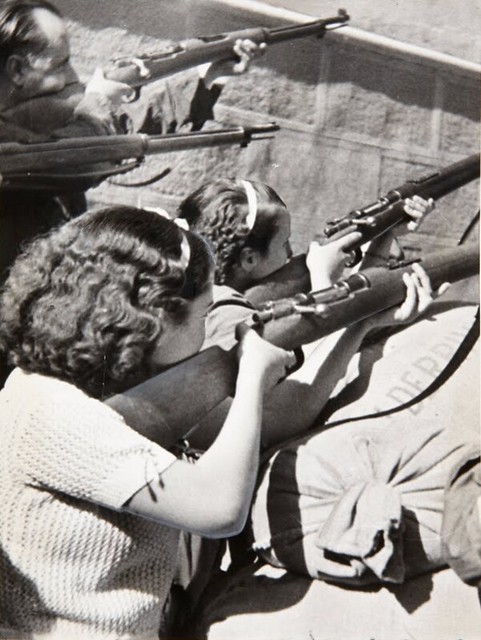
Left: Women at the Siege of the Alcázar in Toledo, 1936. The Spanish Civil War was but one of the conflagrations of the inter-war period, but it epitomised the growing blurring of the lines between civilians and combatants. Source: Wikipedia

Whether you see this era as the pre-amble to The Second World War (and bear in mind that the Chinese see the start of WW2 as when Japan invaded them in the mid-1930s and not in 1939) or as a revolutionary period or as one of the last great ages of adventure, the inter-war era is a vast resource of 'peculiar wars'. I say peculiar as - at least to me - a proportion of the conflicts of this time were more focused on the involvement of the general populous and their aspirations rather than the sabre-rattling imperialism of the previous century.
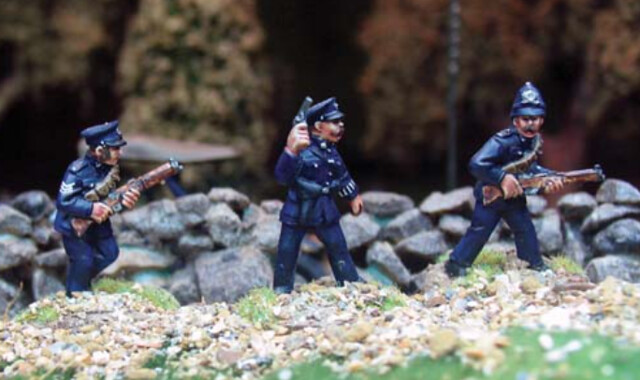
'British Bobbies on Patrol'. This photo from the book illustrates the greater
emphasise there is on irregular, civil and militia forces as belligerents in the
game. Source: Osprey.
Furthermore, I am somewhat intrigued to see how a set of war game rules will capture this aspect of the inter-war conflicts, involve the civilian populous and make provision for popular uprisings and ideological warfare. I'll give my thoughts on this once I've had a good read of the rules.

I am hoping that these game rules can shoe-horn into the actual FLW game rules as a means to expand the basic flexibility of the game. Another option might be to look at Solway's 'A Very British Civil War' gaming rules.

A World Aflame
by Paul Eaglestone
OWG 2
ISBN: 9781849086837
Order ID: 100169343

Link to the book at Osprey's web site: A World Aflame - Interwar Wargame Rules 1918-39

Monday, 18 May 2015

A Fist Full of Armoured Car!

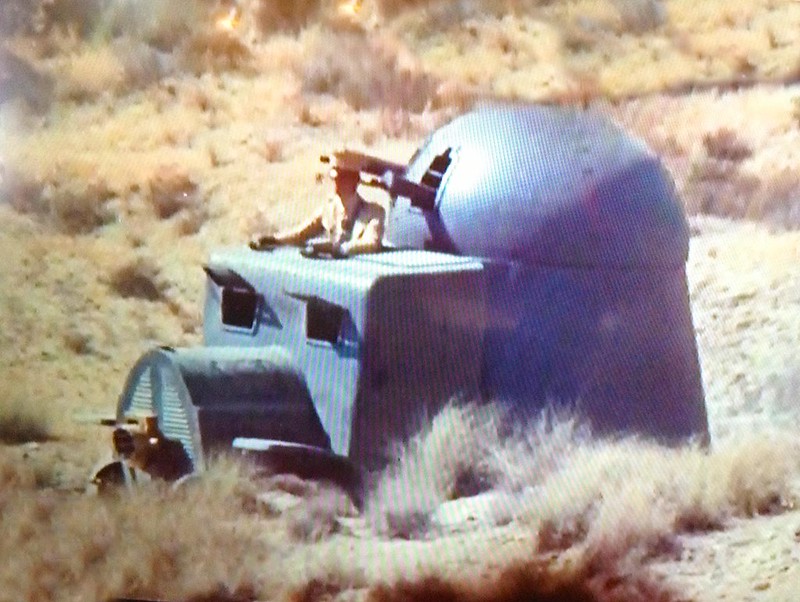
By complete chance I came across a photo of an early armoured car of the Edwardian period which happened to be the very car featured in Sergio Leone classic Spaghetti Western 'A Fistful of Dynamite' (1971)!


This is one of my favourite Spaghetti Westerns, based as it is during the 1913 Mexican Revolution. And I was always curious about the little armoured car driven by the arch-baddie - Colonel Günther "Gutierez" Reza (played by Antoine Saint-John) - and speculated that it might have been a 'made up' vehicle. Well as it turns out - it wasn't...

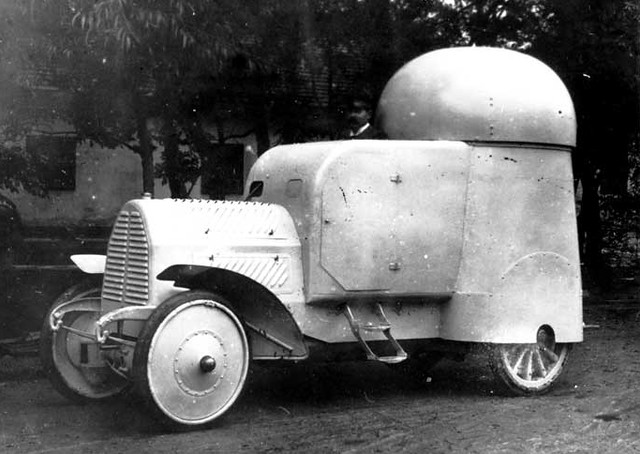
In fact the car was an authentic design (though still may have been assembled by the film-makers on a modern chassis perhaps) and is in fact a c. 1904 vintage Austro-Daimler armoured car!


Austro-Daimler 4x4 four-wheel-drive Armoured Car (1904). Source: Wikipedia
"It was first demonstrated during manoeuvres of the Austrian army in 1906. It was turned down because Emperor Franz-Josef said it was unsuitable for military use since "it would frighten the horses"." [Source: The History Of The 4 Wheel Drive.]

So there you go. Not only a real vehicle but one that was very advanced for it's day. But's what's more interesting - for me - is that's it's development date is within the target date I have set for my Molatarian Army!

A possible scratch build do you think? :)

Monday, 4 May 2015

AiP's 'Gatling Gun' Set - Identifying the guns.

In the end the fact that Armies in Plastic did not include any kind of historic description of the optional gun types that it includes in it's Gatling Gun set was too much for me and I went hunting around the internet for clues.

Disclaimer: First off, I am NOT an artillery expert, and neither do I know exactly what the AiP model designers had in their minds when they produced the set. So what follows is sheer speculation on my part, but I have tried to find the best historical match I could for the AiP gun types in the set. Please feel free to disagree with me.

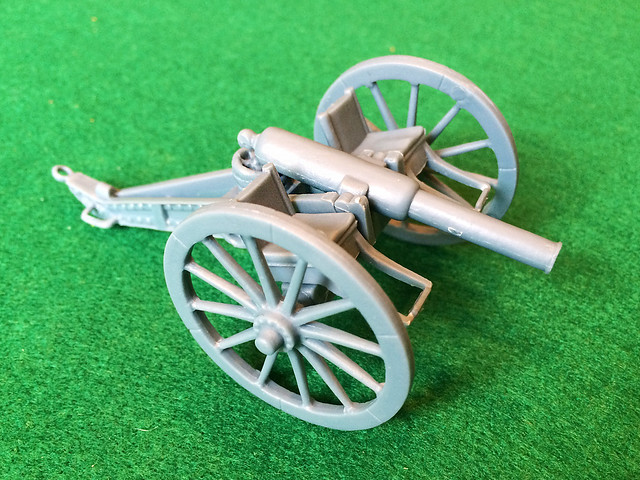
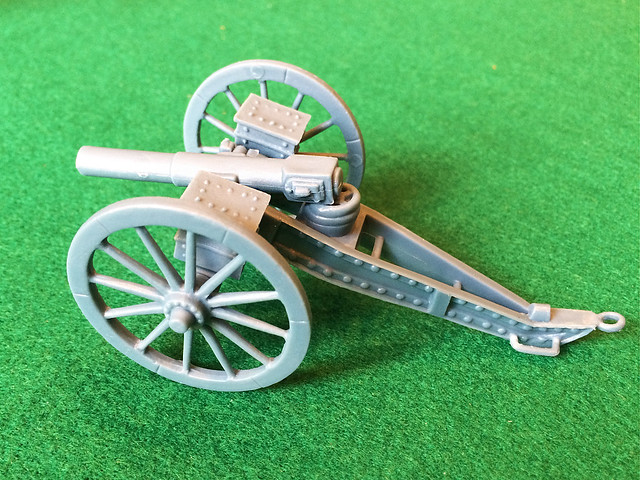
Gun No. 1 - A British Boer War 7/9 Pounder?
Despite me not being an artillery expert I feel that I have to disagree with AiP on the designation of it's 'muzzle loader' barrel. Although they do not give a description of this gun as contained in the Gatling Gun set they have issued this gun in it's own separate set and described it as being a British '7 Pounder'. If you look up British Boer War era 7 Pounders you may agree with me that this barrel looks too big to be a 7 Pounder so I have suggested here my own identification...


Despite the fact that Barrel No. 1 looks like a muzzle loading 'cannon' I went out on a limb and suggested in my early post on the AiP set that it was supposed to be - in fact - some sort of early 'screw breech' loader. It looks like I was wrong and despite the widespread deployment of breech-loading artillery by this time (c. 1899) the muzzle loader, it seems, had not completely disappeared!

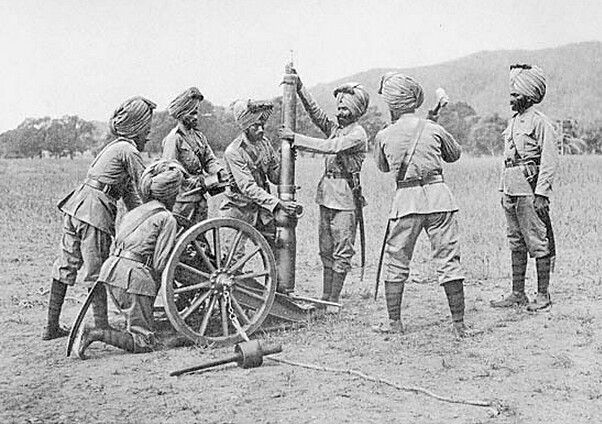
Sikh gunners assembling the RML 2.5 inch 'screw gun', circa. 1895.
This is more like the usual size of carriage of a 'mountain gun.
"In 1877 Colonel Frederick Le Mesurier of the Royal Artillery proposed a gun in 2 parts which would be screwed together...The gun was a rifled muzzle-loader. Gun and carriage were designed to be broken down into their basic parts so they could be transported by pack animals (4 mules) or men. The barrel and breech were carried separately, and screwed together for action, hence the name "screw gun"." [Source: Wikipedia.]

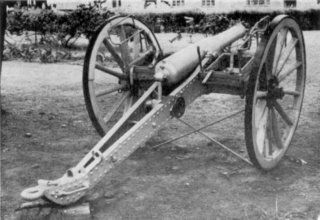
Although these screw-gun variants were intended as fairly light 'Mountain Guns' - their disassembly allowing portability - there were some examples of larger 'medium' field calibre. I strongly suspect that the AiP model is one of these, and in particular I think it may be a 9 Pounder 8 CWT 'screw gun' mounted on an  field carriage...

9 pdr. 'Screw Gun'. Source: The South African Military History Society
According to The South African Military History Society this was an obsolete piece of equipment that was deployed with Colonial Forces (local forces serving on the British side during the Boer War). The Natal Volunteer Hotchkiss Detachment had one 9 pr at the Siege of Ladysmith.

This fits in nicely with the theme of AiP's 'Boer War - Gatling Gun - British Royal Artillery in "Shirt Sleeve Order" - 1899-1902' set. And modeller's would relish the idea of creating a scale re-enactment of the Siege of Ladysmith (read the Wikipedia description of the siege via this link)!

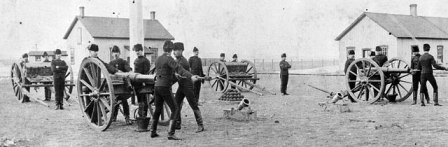
However, conventional one-piece rifled 9 Pounder muzzle loaders were also in British Serviceduring the Boer War. So the AIP muzzle-loading barrel might also be intended to be one of these...


Conventional RML 9-pounder guns of the Northwest Mounted Police (NWMP)
Artillery Detachment, 
D & H Divisions with , Fort MacLeod, Alberta, 17 Dec 1890.
(Library and Archives Canada Photo, MIKAN No. 3574417)
Wikipedia reference for the (non-screw) British RML 9 pounder 8 and 6 cwt guns - these guns were obsolete by the Second Boer War (hence guns like it being relegated to Colonial forces perhaps). So if modelling the First Boer War of 1880-81 or colonial forces, or even pieces captured by the Boer from the second 1889 war this AiP barrel configuration is the most appropriate.

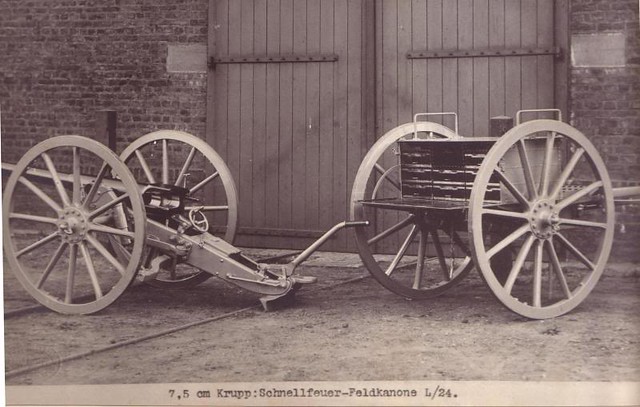
Gun No. 2 - A Boer 7.5cm Krupp L/24?
The second artillery barrel in the AiP set is obviously a proper breech 'block' loader. Now it's a very interesting design as the British breech loaders of the period were - it seems to me - still of the older 'screw breech' (round shaped) mechanism. So this 'square' breech may be another example of how the Boer Republican Army actually overtook the British technologically in some areas - as I suspect that this barrel may be a 7.5cm Krupp L/24!

Ignore my erroneous addition of the Gatling Gun 'boxes', this
artillery piece should be fitted with the crew seats instead. 
Just as the Germans supplied the superb Mauser bolt-action rifle to the Boers - superior to the British rifles of the time - it seems that the Boer also had the benefit of a small number of Krupp Field Guns. According to the Royal Australian Artillery Historical Company web site's artillery register entry for the 75 mm QF (Schnellfeuer-Feldkanone L/24) field gun...

"The assembly was known for its reliability and ease of movement, seldom requiring more than basic maintenance. The brass cartridge cases were filled with “ballistite” smokeless powder, and coupled with the gun’s small carriage and low mounting, made it ideal for Boer camouflaged gun tactics...Although outdated by European continental standards at the turn of the century, in Boer hands this gun was superior to the British 15 and 12-pr BL guns fielded against it. "

So this would be a nice model to pit against the British 9 pounder were you modelling a Boer army.

Photos of this gun from the period are a little blurry, but it looks to me like there is no additional carriage furniture used, so I would be tempted to trim off the fixing stumps which AiP has provided on the axel for the mounting of the crew seats. Here's the best quality photo I have found which, I think, illustrates the configuration of the Krupp gun on it's carriage...

Photo source: Victorian Wars Forum - www.victorianwars.com
Again, like the (alleged) 7 Pounder, the AiP 'Krupp' barrel looks a little chunky compared to the real thing. This may be to ensure that the soft plastic piece does not warp or bend, which is a nasty feature of soft plastic models.

I think this identification is pretty safe.

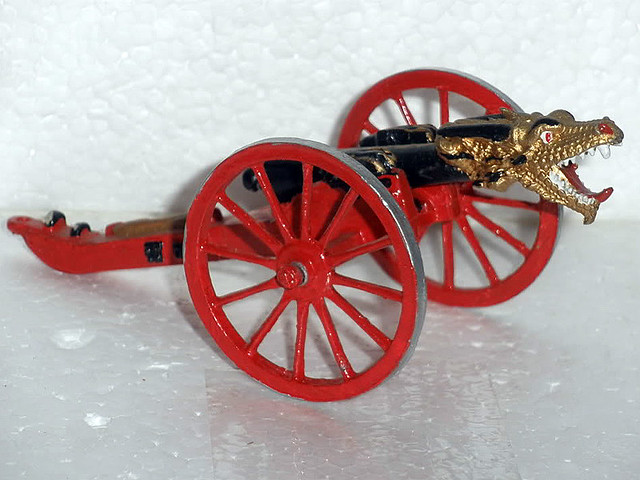
Gun No.3 - Boxer Dragon Gun?
Now, the identity of the last field gun option in the AiP Gatling set is probably the easiest to guess and yet hardest to confirm. Obviously the Dragon design of the barrel seems to be a clear indication that it is Oriental in origin and bearing in mind the historical military campaigns that AiP cover in their plastic soldiers range this would further narrow down the origin of the gun to the Boxer Rebellion (1899-1901).

Again, the Gatling boxes are not appropriate accessories.
AiP already do several sets which cover this theme and as the Gatling Gun and other artillery pieces seem relevant to this period and conflict (used by the European Powers) then it seems logical that this barrel is included with the set.

Unfortunately, in this case, I have been unable to find a reference photo from that conflict which positively identifies this particular style of gun. Neither a web search or by consulting Osprey's Men at Arms No. 95 'The Boxer Rebellion' turned up a picture of a 'Dragon Gun'.

Indeed the only photo I have come across of Imperial Chinese troops with artillery is one which shows them remarkably well equipped with some Krupp breech-loading field gins! [Men at Arms 'Boxer Rebellion', page 25.]

Still, it's a beautifully evocative model and you can imagine such a cannon in the use of the -normally - obsolescently equipped Boxers. It would make a wonderful diorama.

Unfortunately the only picture I could find on the web of a 'Dragon Gun' was this
spectacular metal model. Some nice ideas for painting the AiP gun!
Source: The Toy Soldier Forum
So, I'm afraid I will have to admit defeat on this occasion (for the moment) and simply say that the design of this gun is at least in keeping or the spirit of the Boxer equipment of the time. But if I do come across (or if you know of) a piece of reference for this amazing field gun I will post up teh information at a later date.

Monday, 21 October 2013

Even more uniform reference books - for free!

Reference material is like buses, you can't get any for ages and then a load comes at once! (Sorry, I couldn't resist regurgitating that old chestnut!)

I happened to be doing some late night surfing, just tootling around not looking for anything in particular, when I came across the 'Italian Society of Military History' web site. It's in Italian - naturally - so it was quite a feat of luck that I came across their download section (thank goodness for Google Chrome's translate feature)!

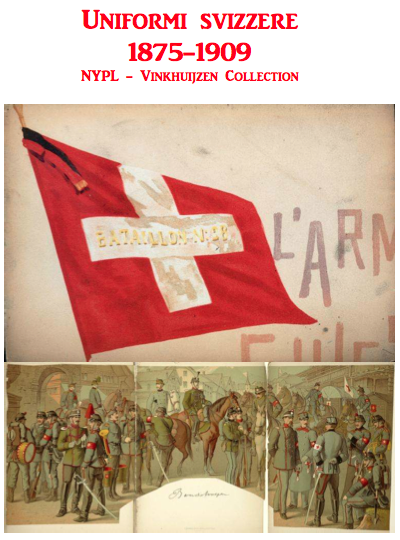
The site has a pretty large PDF archive, the contents of which is offers FOR FREE. I didn't expect much so imagine my surprise when I came across Koppen's 1890 'Armies of Europe' and the NYPL - Vinkhuijzen Collection's 'Uniformi Svizzere 1875-1909'!

Now, as far as I understand both of these antique publications are now in the public domain having been out of publication for well over 100 years, so I was happy to make use of this resource and downloaded...

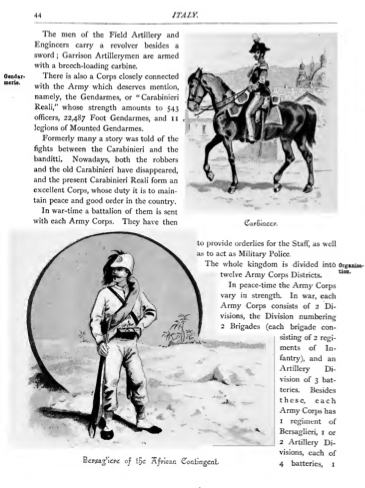
Koppen's 1890 'Armies of Europe'
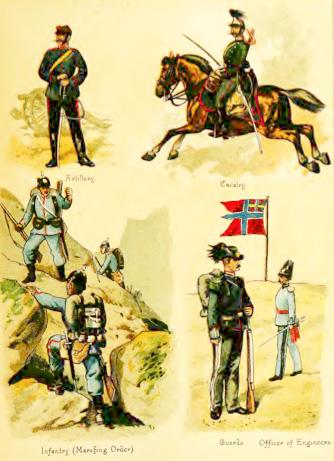
Actually, although - of course - the quaintly illustrated colour plates are very welcome this book has wealth of period text describing the disposition and organisation of the armies that it covers. These include; Britain, Germany, Austro-Hungary, Italy, France, Russia, Denmark, Sweden and Norway, Spain and Portugal, Switzerland, Holland and Belgium and Turkey and The States of the Balkan Peninsula!

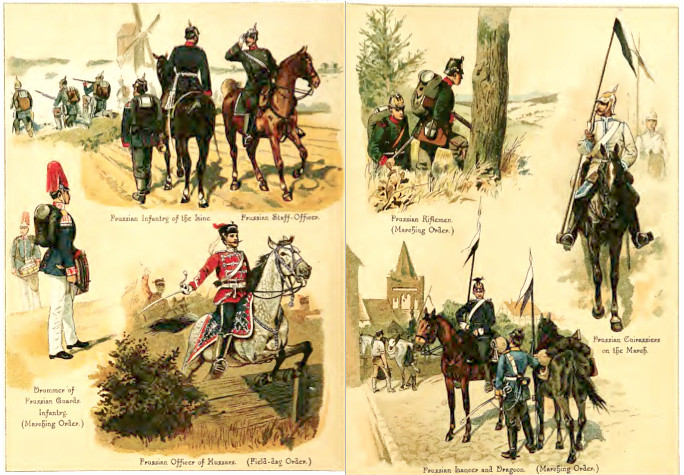
To be honest, the colour plates are not the best illustrations I have seen - I'm almost tempted to say that they are intended for a younger audience - and to make matters worse whoever scanned this publication did so rather amateurishly and the plates are rather dark (hiding some of the more subtle colours). The example plates I have included here have been Photoshoped by myself to enhance brightness, contrast and vibrance and are now a little more useful.

One of the colour plates for the German army. All together - Boo! Hiss!

However, I was very pleased that the publication included a few armies that are not usually covered and in particular appreciated the fact that the Scandinavian nations were represented.

Norway! Huzzah!

As mentioned, the monochrome printed pages are just as useful, I think, and these include some charming line drawing as well. The PDF includes some 172 pages but a rather nice 'added bonus' were the amusing Victorian advertisements included at the back of the book!

All in all, this is a wonderful volume and definitely fills in some of the reference holes that modern material leaves in the history of European uniforms of the period.

Koppen's 1890 Armies of Europe - PDF direct download link


'Uniformi Svizzere 1875-1909'
Ah, Switzerland! Cookoo clocks and chocolate...And home of one of the damn finest armies in Europe!

No, these sturdy chaps didn't see any action in the 19th/20th centuries, but that didn't stop them becoming one of the more modern, professional and well equipped armed forces on the continent. For sure, if anyone had infringed their neutrality then they would have payed a very high price for doing so.

But anyway, Switzerland - or Army Red and White to put it in Funny Little Wars terms - is a wonderful subject for a book on uniforms as they really do turn out a smart body of men.

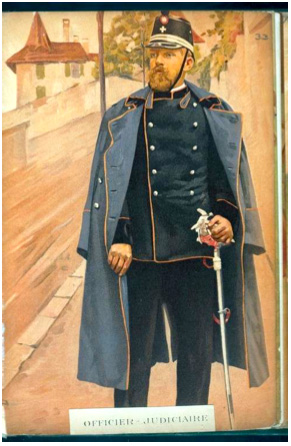
The book - some 45 pages long - is actually more of a pictorial study or collection of period lithographs. There is no accompanying text other than some very short captions within the illustrations themselves. But what illustrations!

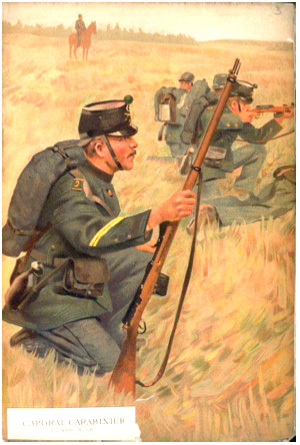
The rifle is the 1889 Schmidt-Rubin in 7.5×53.5mm.
Unusually for the time it had a 12 round capacity.

The artwork in this collection is absolutely wonderful, realistic, full of character and a delight in detail. It includes individual figure from most organisational arms, each captured in what looks like manoeuvres in the field. It's all very atmospheric and dynamic and - unlike 'Armies of Europe' has been scanned with some degree of expertise.

As well as a glorious reference tome these colour plates would look very handsome indeed in picture frames, they are that attractive. But the real joy of well drawn illustrations like these is the level of detail when it comes to the uniforms, there is little room for doubt as every uniform is captured accurately.


The Swiss army may be something of a niche subject - although I can think of at least one of my readers who will be very pleased with this book - but one cannot help but being very impressed with these superb illustrations.

'Uniformi Svizzere 1875-1909' - PDF Direct download link

My thanks goes out to the Italian Society of Military History for making these publications available freely to it's visitors. You can see it's full download archive here: Società Italiana di Storia Militare - ARCHIVIO LIBRI IN REGALO

Sunday, 20 October 2013

Vive la différence!


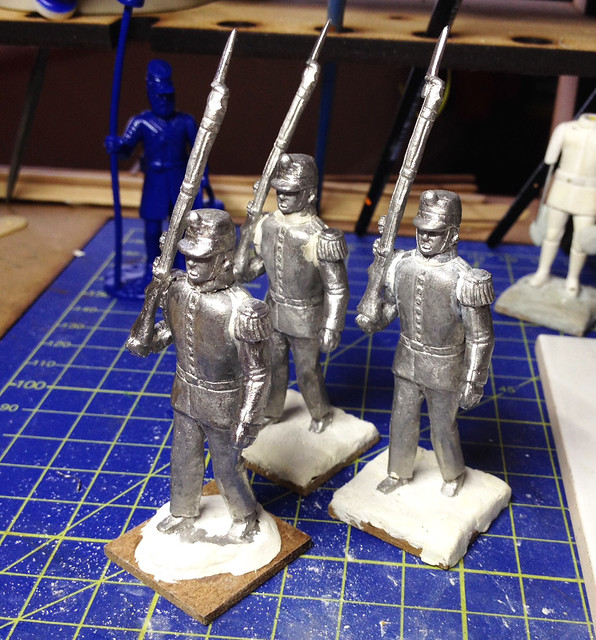
Between project tasks I've been slowly assembling some of my 1/32 Black Hat metal French Infantry of the Line figures. They are a nice change of pace from the intense concentration I've been doing with my sculpting project.

The other good thing about this French side project is that it isn't a long term project as I don't intend these figure to be used as a core of some French inspired FLW army. They are a stand-alone set I'm just doing for some fun. (I do have a metal 'Horizon Blue' FLW in mind, but this will be based on the rather smaller '54mm' figures of Dorset and Irregular miniatures. This project is a long term idea and is just in the 'collecting phase' at the moment.)

Any way - Vive la différence!

I do really like the Black Hat '54mm' range - though they are of the larger end of the 54mm spectrum (what I call 1/32 to help differentiate them). They wouldn't be compatible with vintage Britains toy soldiers, for example.

One other thing about the Black Hat range is that it is rather limited. They have a selection of these marching infantrymen and officers, but aside from their artillery team figures they so not have a great variety in poses and supporting characters. So, if you want to build an army based on the Black Hat figures you would have to be prepared to do a fair amount of conversion in order to be able to portray the many types of troops you need.

Anyhoo, it seems this weekend's theme is trying something different as while visiting York yesterday I picked up a little book that is rather off-piste for me.

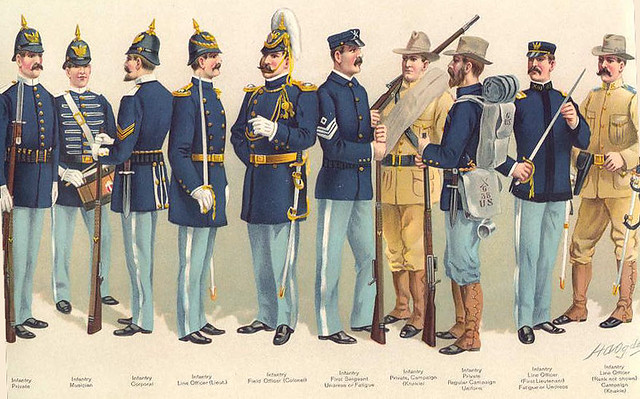
The paperback reference book is by a company called G.I. and is in the vein of Osprey's reference publications. Called 'Fix Bayonets: U.S.Infantry from the American Civil War to the Surrender of Japan' it's an illustrated history of American uniforms which encompasses the time period that most interests me - 1890-1910 (though the book, in total, covers a period from 1865-1946).

I have never really been bitten by the American Civil War bug and American military history as a whole is a bit of a yawn to me, BUT the one era I do find of interest is my target era when America looked more externally and dallied with what can be described as a 'colonial' state of mind. From the Spanish-American War to the Boxer Rebellion the United States seemed to fall in-line with the other great powers and this was also true of their uniforms.

Although the US Army retained a distinctively American style to their dress, but at least in their 1881-1900 dress uniforms they assimilated a distinctly European influence which perhaps suggested a dalliance with the idea of competing on a global stage before they once again returned to their inward looking politics prior to the First World War.

Circa 1899 - this lovely colour plate from the G.I. book shows a good
selection of US rank and officer dress and campaign uniforms.
Source: G.I. Books - see links below.

Of course the above idea is only my own opinion, but from the point of view of an exponent of Funny Little Wars it seems to me that this short window of time would be the ideal time on which to base a Army Red/White/Blue.

The book itself does not have the series of specially illustrated colour plates that the Osprey reference books have but rather has a small selection of period colour lithographs and photographs at the beginning of the book. The rest of the publication is a chronographic record of the uniforms of the US Army by means of original monochrome photography.

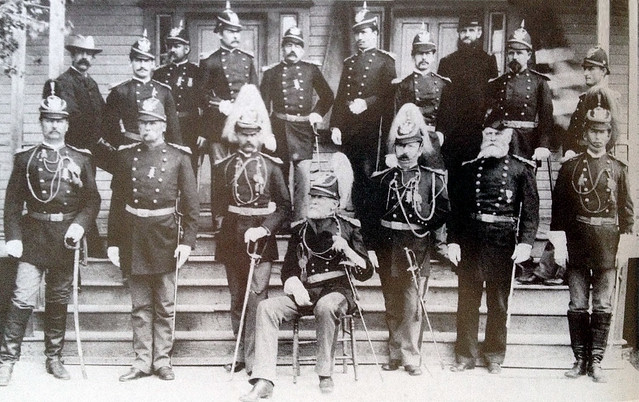
Officers of the 17th US Infantry c. 1884 - note the almost Teutonic look
of the officer bottom left!
Source: G.I. Books - see links below.

Commentary, such as there is, is restricted to the short captions which accompany the photographs. I was left with a feeling that I wanted to know more and so, ironically, might look into whether Osprey do a similar reference book!

The G.I. publication is more of a complimentary item if you are researching the subject and the period, and would - I think - be a very useful companion volume to something like an Osprey 'Men at Arms' book.

Still, for just £5 (second hand from Barbican Books) it is a very entertaining - and educational - booklet. I was unaware of just what the United States was 'up to' during my favoured 1890-1910 period of time. The collection of photographs are excellent and I might even be tempted to seek out the relevant G.I. cavalry volume which covers the same period.

Relevant links:

> Black Hat Miniatures (UK) - 54mm toy soldiers range

> Greenhill Books (for G.I. Books in UK)

> Stackpole Books (for G.I. Books in USA)

> Barbican Bookshop York - a lovely little treasure trove of second-hand books.

Tuesday, 15 October 2013

eBook: Uniforms of the Belgian Army 1880-90

As mentioned a few times over the past couple of weeks I am somewhat consumed by the history of the Belgian army at the turn of the 19/20th century. However, like so many military themes set in the 'hiatus' period between the end of the Franco-Prussian War and the start of World War One getting good reference material is something of a problem*. Publishers like Osprey, for example, just do not seem to be interested in the organisation of armies during peace time periods, their attitude seems to be that if there is no conflict or campaign military enthusiasts are just not interested!

*Of course there was the Boxer Rebellion and some colonial action, including the Boar War, but otherwise this period - between 1871 and 1914 - seems to be a period of preparation for The Great War!

Anyway, thus far the volumes of greatest use to me have been Haswell Miller's 'Vanished Armies' and Osprey's 'The Belgian Army in World War 1', both of which - of course - focus of the build up and early years of The Great War. However, they do include a interesting insight into the way that European armies transitioned from the Edwardian peacetime uniforms into the drabber battledress of trench warfare.

Liebig S608 Belgian Military Uniforms 1899  - these collectors cards were
given away with their beef extract! Hey, I'll take reference where I can get it!
Picture source: Cigcardpix Flickr album

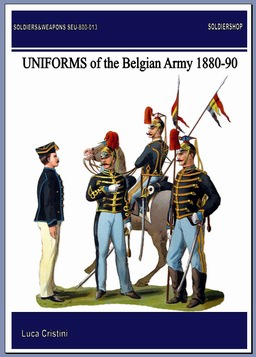
Well, luckily for me I happened across a slim title from the Soldiershop.com entitled 'Uniforms of the Belgian Army 1880-90'. It's more of an illustrated pamphlet than an in-depth study but it has the advantage of being an authentic period piece (re-published by the said online reference publisher).

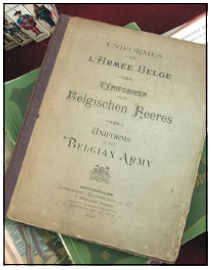
Left: Originally published in 1893, the original pamphlet has been converted into an eBook by Soldiershop.com (Photo: Soldiershop.com)

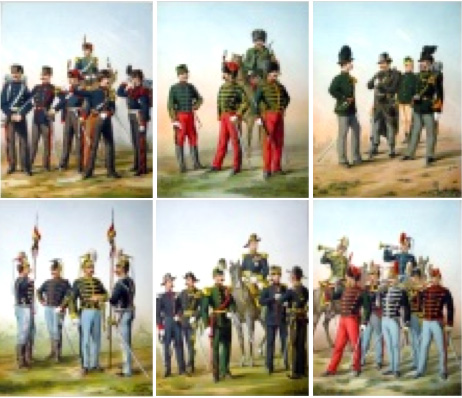
This little book contains 12 colour lithographs featuring a total of 59 figures representing the cavalry, infantry, artillery, auxiliary and general staff of the Belgian army.

The illustrations are wonderfully quaint, but equally they are crisp and clear and give a good rendition of the colours of the various arms. Accompanying text is limited, I'm afraid, to one brief line per figure on the opposing page, giving the unit and rank of the soldier depicted. It's a great pity that this scant information has not been expanded on in some sort of supplement at the back of the re-publication, but beggars can't be choosers.

Some thumbnails of the plates showing the great diversity of uniforms
which typified a pre-WW1 European army, even one as small as the Belgian.
Picture source: Soldiershop.com
The reference that this little book affords me is greatly appreciated and will inspire, no doubt, some very creative and colourful toy soldiers for my army of Molatero! But most of all I greatly appreciated the price of this book...Gratis!

That's right, this eBook didn't cost me a penny.

Now don't ask me why, for as far as I could see this PDF download should have cost me 7.50 Euros - a price, I hasten to add, that I was more than happy to pay - but perhaps due to some strange glitch at the PayPal end of Soldiershop.com's shopping cart process I could not seem to complete the transaction. Hugely disappointed I abandoned my attempt to buy the item, but on checking my email this morning I found I had been sent a link to the download for this PDF in any case!

Bizzarre! (But, hey, I'm not going to complain!)

Soldiershop.com has some additional eBooks that interest me - mainly on the French army of my target period of around 1890 - so I may be tempted to try and see if the same glitch applies. ;)

But in any case, as I said, for such a niche publication the stated price of 7.50 Euro is definitely worth the paying...IF you can pay that is.

I couldn't resist including this picture of these beautiful toy soldiers...
Slightly later, but still an evocative example of how the Belgian army
entered into the Great War with an antiquated air. This dog-drawn Maxim
unit was made by Beau Geste typified the '19th century' influence that was
soon to be harshly eradicated in the murderous trench warfare of WW1.

Saturday, 10 August 2013

Gotcha! French 1905 uniform

A reference note to myself!

There is no doubt that French army uniforms of the period between the end of the Franco-Prussian War (1871) to the start of The Great War (1914) are something of a puzzle. As a period of relative peace this era is not covered by the usual reference pamphlets - like Osprey's Men at Arms - and what useful material that might exist is - as you might expect - written in French!

A bit of a bugger really as I am interested in French uniforms between 1890 and 1910. My Black Hat Infanterie De Ligne do not seem to fit into the uniform styles which are covered by the mainstream reference material and this has been a cause of some frustration. I just could not seem to find a historical example which depicted the uniform modelled by Black Hat's Frenchies!

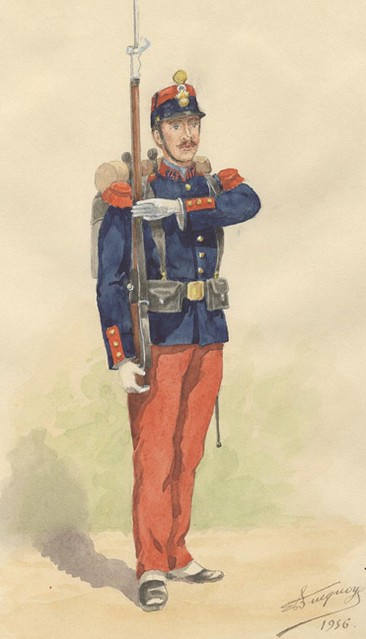
Well, hopefully, I finally solved the mystery of this particular toy soldier when I came across a very nice set of French watercolours online. They depicted the history of the 147th Infantry Regiment of Sedan and the example of a soldier of 1905 caught my eye...

Left: Soldier of the 147th Infantry Regiment (1900-1905). Raiment: shorter tunic with red collar and a row of buttons with flap facing in 1899 that lasted until the first world war. He is equipped with a Lebel rifle.

This illustration is the closest thing I have found that is similar to Black Hat's French toy soldiers. The Black Hat toy doesn't have the webbing kit or back-pack but otherwise is a nice representation of the 1905 pattern French infantry uniform.